
Diesel engine oil and gasoline engine oil are two of the most commonly used types of oil on the market today. However, many questions arise regarding the differences between these two types of oil and whether they can be used interchangeably. In this article, AutoX Furion will answer these questions.
Differences between diesel and gasoline engines
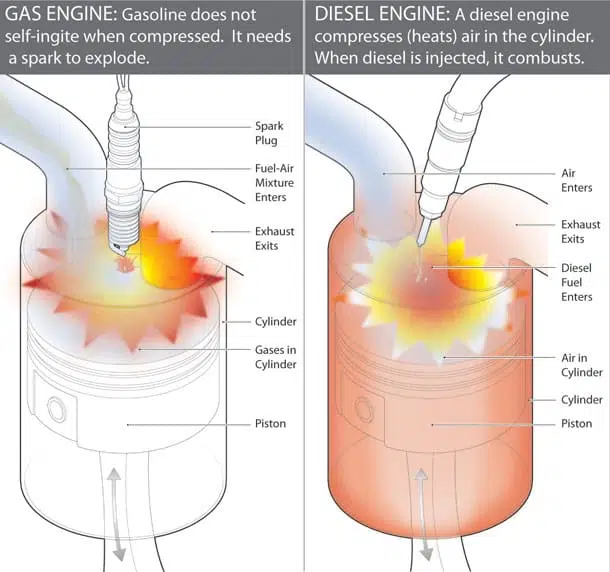
dầu nhớt động cơ diesel
A gasoline engine uses gasoline as fuel. This engine generates power through the combustion of a fuel-air mixture in the cylinder, thanks to an electric spark from a spark plug.
A diesel engine uses diesel fuel (DO oil). Diesel engines generate power through the combustion of a fuel-air mixture in the cylinder; there is no spark plug.
For a more detailed comparison, please refer to the following table from AutoX Furion:
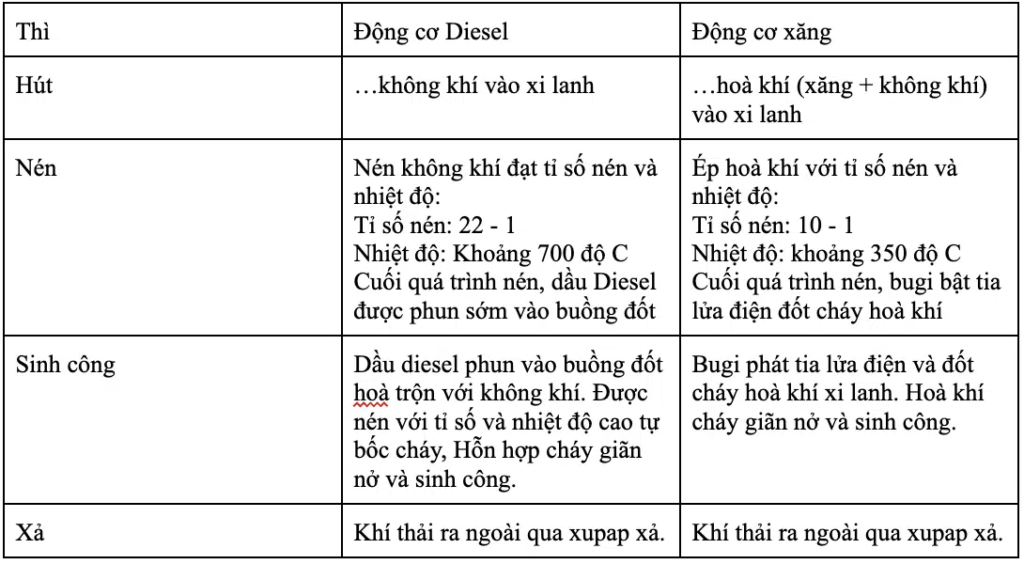
Besides their similarities, each engine has its own advantages and disadvantages.
1.1 Advantages of Diesel Engines
Diesel engines have higher efficiency than gasoline engines (1.5 times).
Diesel fuel is cheaper than gasoline.
Diesel engines have lower fuel consumption than gasoline engines.
Diesel fuel does not ignite at normal temperatures, making it less dangerous.
Because they lack carburetors and ignition systems, diesel engines experience fewer minor malfunctions.
Diesel engines handle overloads better than gasoline engines.
1.2 Disadvantages of Diesel Engines
Despite the superior advantages of diesel engines as mentioned above, they still have some unavoidable drawbacks:
For the same power output, diesel engines are heavier than gasoline engines.
Diesel engines have a higher compression ratio, requiring higher quality engine components. This leads to higher manufacturing costs.
The fuel system components in diesel engines are highly precise (error margin of only about 1/100mm), such as the high-pressure pump and fuel injectors, resulting in higher manufacturing and repair costs.
Repairing diesel engine components requires specialized machinery, expensive tools, and highly skilled technicians.
Diesel engines operate at lower speeds than gasoline engines.
Diesel engines are noisier and have a stronger odor than gasoline engines. However, these issues have been addressed with advanced technologies.
- Can diesel engine oil be used in gasoline engines?
For multi-purpose oils, the answer is yes. For example, engine oil with an API CH 4/SL rating means it’s a H-grade oil for diesel engines and an L-grade oil for gasoline engines.
However, it’s preferable to use it for gasoline engines, and when using oil, you must adhere to the engine manufacturer’s instructions regarding SAE, API ratings, and oil change intervals. The engine type indicated by the “/” sign (S or C) indicates the preferred engine type.
- Which type of engine oil should be used for diesel and gasoline engines?
Currently, experts recommend using specialized engine oil for each type of diesel engine based on criteria such as: fuel efficiency, compliance with emission standards, total alkalinity, soot dispersion, and protection of the engine’s exhaust systems.
Some characteristics of engine oils for gasoline and diesel engines:
Viscosity: Gasoline engine oil generally has lower viscosity than diesel engine oil due to the harsher operating conditions and higher load of diesel engines.
Exhaust system: The particulate filter (DPF) in a diesel engine operates in a harsher environment than in a gasoline engine, leading to higher soot contamination and higher temperatures in the oil. In gasoline engines, the EGR (Electro-Recirculating Gas) filter increases the amount of hot air in the combustion chamber, resulting in more oxidation products.
Additives in oil: Diesel engine additives contain high levels of sulfur and phosphorus (SAPS), which have a greater impact on catalytic converters that remove NOx: SCR (Selective Catalytic Reduction).
Other factors: Gasoline engines prioritize good dispersion, while diesel engines focus on the alkalinity (TBN – Total Base Number) of the diesel engine oil.
Choosing the right engine oil requires drivers to have a thorough understanding of their vehicle. If you’re still unsure about the right oil, consider AutoX Furion.
For new trucks, AutoX Furion 15W40 is an excellent choice with the following benefits:
Provides optimal engine and turbocharger protection: wear resistance, acid neutralization from combustion, corrosion and rust prevention…
Optimizes usage costs: oxidation resistance and thermal stability reduce the breakdown of oil molecular structure, thus extending oil life.
Keeps the engine clean until the end of the oil change cycle: reduces sludge formation, effectively disperses and dissolves soot and deposits.
Reduces oil consumption throughout engine operation.
Suitable for both high- and very low-sulfur fuel engines.
Meets OEM engine standards and European emission standards.
For older trucks, AutoX Furion 20W50 offers superior benefits:
Provides optimal engine and turbocharger protection: Wear resistance, neutralizes acids from combustion, prevents corrosion and rust…
Keeps the engine clean until the end of the oil change cycle: reduces sludge formation, effectively disperses and dissolves soot and deposits.
Reduces oil consumption throughout the engine’s operation.
Preserves the performance of older engines after many years of operation.
Suitable for both high- and extremely low-sulfur fuel engines.
Meets OEM engine standards.